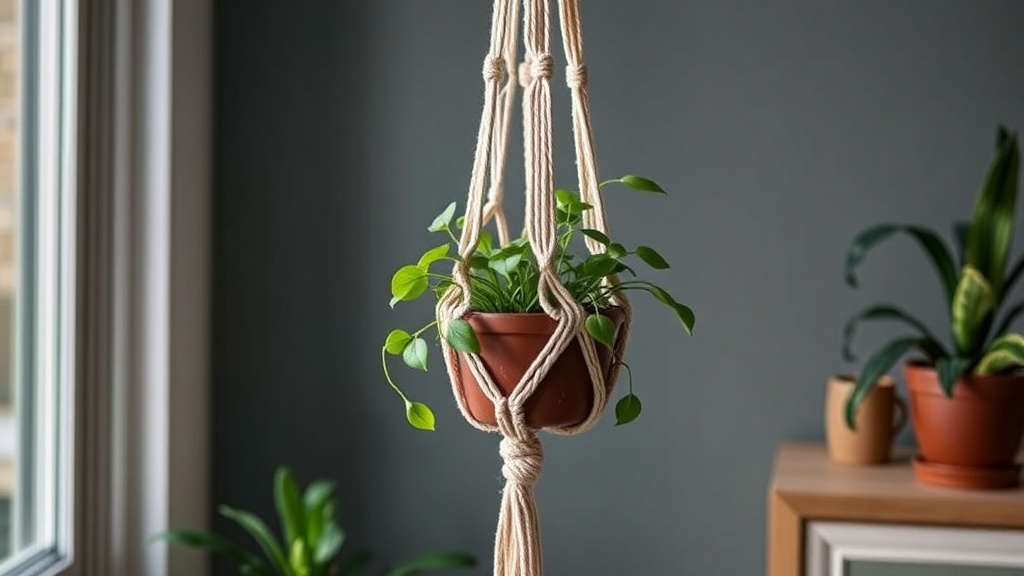
How to Make a Macrame Plant Hanger: A Beginner's Guide

What is macrame and why make a plant hanger?
Macrame is a textile art form that uses knotting techniques—rather than weaving or knitting—to create decorative and functional pieces. A macrame plant hanger offers an elegant way to display houseplants while keeping surfaces clear and adding vertical interest to any room. The craft requires minimal tools, costs less than most store-bought alternatives, and produces a handmade piece that outlasts cheap plastic hangers by years. Whether looking to fill an empty corner with trailing pothos or create a cascading herb display in a sunny kitchen window, this project delivers professional-looking results from the very first attempt.
What supplies do you need to start macrame?
The beauty of macrame lies in its simplicity—most projects require only three items: cord, scissors, and a measuring tape. For a standard plant hanger suitable for a 6-inch pot, gather these specific materials:
- Macrame cord: 3mm or 4mm single-twist cotton cord works best for beginners. The Lily Sugar'n Cream cotton yarn or Ganxxet macrame cord (available on Amazon) offers consistent quality. Avoid jute or hemp for first projects—the rough texture makes learning harder.
- Wooden ring (optional): A 2-inch wooden or metal ring at the top creates a clean hanging point. Most craft stores stock these near the jewelry-making supplies.
- Scissors: Sharp fabric scissors—Fiskars or Gingher models—cut through multiple cord layers cleanly. Dull blades fray cotton fibers and create uneven ends.
- Measuring tape: A standard 60-inch tape suffices. Precision matters here; cutting cords too short ruins the project.
- Plant pot: Any lightweight container—terracotta, plastic, or ceramic under 3 pounds. The hanger distributes weight across multiple knots, but excessive heft risks wall hook failure.
Worth noting: specialty macrame tools like comb brushes and cord holders exist, but they're unnecessary for beginners. A simple clipboard or masking tape secures work just fine.
How do you tie the basic macrame knots?
Every macrame plant hanger builds from three fundamental knots—the square knot, the spiral knot, and the gathering knot. Master these, and virtually any pattern becomes accessible.
The Square Knot
This is the workhorse of macrame. Take four cords (two working cords on the outside, two filler cords in the middle). Cross the left working cord over the fillers, then under the right working cord. Bring the right cord under the fillers and up through the loop on the left. Pull tight. Repeat in reverse—right over fillers, left under and through. That's one complete square knot. The pattern creates a flat, braided appearance perfect for structural sections.
The Spiral Knot
Similar setup—four cords, two working, two filler—but here's the twist: instead of alternating sides, always start with the left cord. Cross left over fillers, right under and through. Repeat, starting left every time. After six or seven repetitions, the knot twists naturally, creating a rope-like spiral. (This technique dates back to 13th-century Arabic weavers—pretty neat history for a simple hand motion.)
The Gathering Knot
Also called the wrapping knot, this finishes pieces neatly. Take a separate 12-inch cord and fold it in half, creating a loop at the folded end. Lay this loop against the main cords you want to gather, with the loop pointing up. Wrap the two loose ends around the main cords and the loop, working downward about an inch. Thread the loose ends through the bottom of the loop, then pull the top of the loop until it disappears inside the wraps. Trim excess—the knot holds itself.
What is the step-by-step process for making a plant hanger?
With supplies gathered and knots practiced, construction takes roughly 45 minutes. Follow this sequence for a classic four-strand hanger with spiral accents:
- Cut the cords: Measure and cut eight cords, each 15 feet long. Yes—feet, not inches. Excess gets trimmed later, and running short ruins the project. Fold all eight cords in half evenly.
- Attach to the ring: If using a wooden ring, thread the folded centers through the ring to create loops, then pull the loose ends through those loops (this is a lark's head knot). Without a ring, simply gather the folded centers and tie one large gathering knot, leaving a 4-inch loop above for hanging.
- Create the top section: Separate the 16 loose ends into four groups of four cords each. Tie 12 spiral knots in each group—this forms the decorative "neck" of the hanger. The spirals should measure roughly 6 inches each.
- Form the basket base: Now for the structure. Take two adjacent cord groups. Use the two outer cords from each group (four cords total) to tie a square knot about 4 inches below the last spiral knot. Repeat around the circle—four square knots total, each connecting neighboring groups.
- Continue the basket: Move down 4 inches. This time, take one cord from each adjacent square knot—again four cords—and tie another square knot. This creates a diamond pattern that cradles the pot.
- Create the base: After three rows of square knots (adjust based on pot height), gather all cords together. Tie one large gathering knot at the bottom, leaving enough space for the pot to rest securely.
- Finish: Trim the bottom cords to a decorative fringe—8 to 12 inches looks balanced. Comb through with fingers to separate fibers for a fuller appearance.
The catch? Tension consistency separates amateur from professional-looking work. Pull each knot with similar tightness—too loose creates gaps where pots slip through; too tight warps the shape.
Which cord type works best for plant hangers?
Cord selection impacts appearance, durability, and ease of learning. Here's how common options compare:
| Cord Type | Best For | Pros | Cons | Price Range |
|---|---|---|---|---|
| Single-twist cotton | Beginners, indoor use | Soft, easy to untie mistakes, fringes beautifully | Weakens outdoors, shows dirt | $8-15 per 100 yards |
| 3-ply cotton | Structural pieces, heavy pots | Strong, holds shape well | Stiffer, harder on hands | $10-18 per 100 yards |
| Recycled cotton | Eco-conscious crafters | Sustainable, unique texture variations | Inconsistent thickness | $12-20 per 100 yards |
| Macrame rope (braided) | Outdoor hangers | Weather-resistant, durable | Doesn't fringe, limited colors | $15-25 per 100 yards |
| Jute | Rustic/bohemian aesthetic | Natural look, inexpensive | Rough texture, sheds fibers | $5-10 per 100 yards |
For a first project, the Bobina 3mm single-twist cotton cord (available at Michaels and Amazon) offers the ideal balance of workability and finished appearance. It's the same material featured in most Craftsy macrame courses—a solid endorsement for consistency.
How do you hang a macrame plant hanger safely?
A full 6-inch terracotta pot with soil and plant weighs roughly 4-5 pounds. Wet soil adds another pound. Standard ceiling hooks claim 10-15 pound capacity, but that assumes perfect installation. Here's the thing: drywall anchors pull out over time, especially with humidity changes and the gentle swaying motion of hanging plants.
For secure installation:
- Ceiling joists: The gold standard. Use a stud finder to locate joists, then install a swag hook or eye bolt directly into wood. This supports 50+ pounds indefinitely.
- Wall studs: Similar approach—find vertical framing members and install hooks there. Position plants away from walls to prevent foliage damage during swinging.
- Tension rods: For renters, a Rod Desyne tension curtain rod across a window frame supports lighter arrangements (under 3 pounds). Test stability before trusting valuable plants.
- Command hooks: Skip these entirely. The adhesive degrades with temperature fluctuations—plants crash eventually.
That said, the hanger itself rarely fails—installation points do. Check hooks quarterly, tightening if loose.
What plants work best in macrame hangers?
Trailing varieties showcase the vertical format beautifully. Consider these proven options available at most garden centers:
Pothos (Epipremnum aureum): The undisputed champion. Tolerates low light, forgives missed waterings, and produces cascades of heart-shaped leaves. The 'Marble Queen' variety offers white variegation that pops against natural cotton cords. Available at Lowe's and most grocery stores for $8-15.
Spider plant (Chlorophytum comosum): Produces "babies" on long arching stems—perfect for hangers. Adaptable to most light conditions and pet-safe (unlike pothos, which is toxic to cats and dogs).
String of pearls (Senecio rowleyanus): Creates waterfall effects with pea-shaped leaves. Requires bright indirect light and infrequent watering—overwatering kills faster than underwatering.
Trailing philodendron: The 'Brasil' variety offers lime-green stripes that complement natural fiber aesthetics. Faster growing than pothos, requiring more frequent pruning.
Avoid heavy succulents like jade plants or large snake plants—the weight strains hangers and creates top-heavy instability. Ferns work beautifully but demand frequent watering; the repeated moisture exposure eventually stiffens and darkens cotton cords.
How do you clean and maintain macrame plant hangers?
Dust accumulates in the textured knots, and occasional soil spills happen. For routine cleaning, vacuum gently using an upholstery attachment—no beater bars, which snag fibers. For deeper cleaning, remove the plant (critical—roots hate soap), then submerge the hanger in cool water with mild detergent like Dr. Bronner's castile soap. Swish gently, squeeze without wringing, and air dry completely before rehanging.
Direct sunlight yellows natural cotton over months—rotate hangers periodically if placed near windows. For outdoor hangers, bring them inside during winter months; freeze-thaw cycles degrade fibers rapidly.
After six months of use, inspect knot integrity, especially at stress points where cords bend around the hanging ring. Retighten any loosened sections—the weight of growing plants gradually settles knots over time.