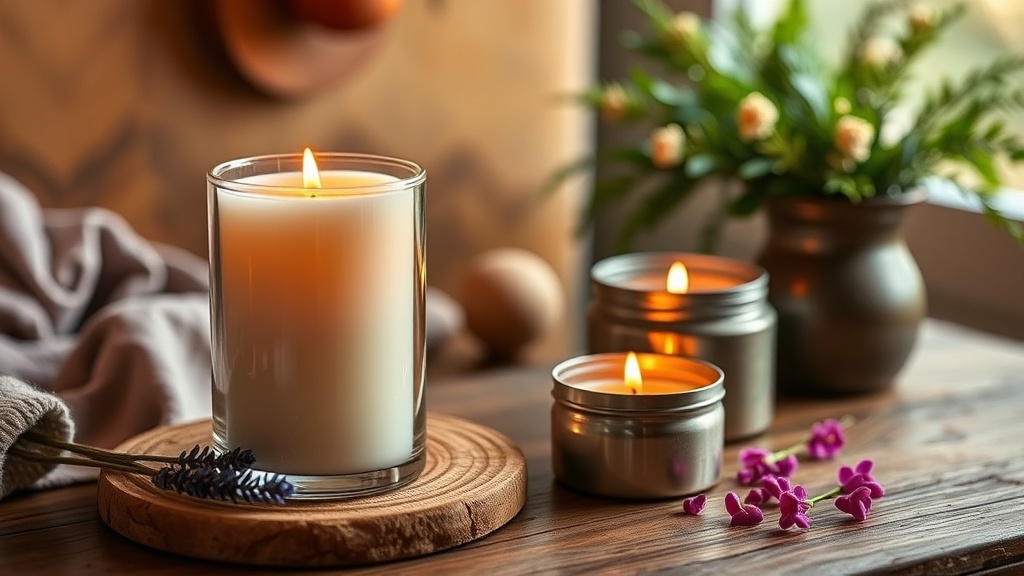
How to Make Hand-Poured Soy Candles at Home: A Beginner's Guide

This guide covers everything needed to make professional-quality soy candles at home — from selecting the right wax and wicks to mastering the pour and troubleshooting common issues. Whether you're looking to start a small business or simply want to fill your space with custom scents, hand-poured soy candles offer an accessible entry point into candle making without expensive equipment or years of experience.
What Supplies Do You Need to Make Soy Candles at Home?
You'll need eight core supplies to get started. The good news? Most items are affordable and readily available online or at craft stores.
The Essential Supply List
- Soy wax flakes — Golden Brands 464 is a favorite among beginners for its excellent scent throw and smooth tops.
- Candle wicks — Cotton or cotton-paper blends work best with soy. CandleScience ECO wicks are reliable and widely available.
- Fragrance oils — Choose oils specifically formulated for candle making (not essential oils alone, which often struggle to throw scent).
- Containers — Heat-safe glass jars like Anchor Hocking Mason jars or straight-sided tumblers from CandleScience.
- Double boiler or pouring pitcher — A dedicated aluminum pitcher (like the 4-pound model from Amazon Basics) prevents cross-contamination between fragrances.
- Thermometer — A simple digital or infrared thermometer ensures proper pouring temperature.
- Wick centering device — Metal or plastic wick bars hold wicks upright during cooling.
- Scale — A digital kitchen scale for precise wax and fragrance measurements.
That said, don't feel pressured to buy everything at once. Many beginners start with a simple kit from CandleScience or Nature's Garden — typically $40-$60 and enough for 4-6 candles.
How Do You Calculate the Right Amount of Wax and Fragrance?
For a standard 8-ounce jar, you'll need approximately 6.5 ounces of wax and 0.6-0.8 ounces of fragrance oil (using a 10% fragrance load).
Getting the math right matters. Too much fragrance and the candle won't burn cleanly; too little and you'll barely smell it. Here's the thing about soy wax — it's less porous than paraffin, so it holds fragrance differently.
| Container Size | Wax Needed (ounces) | Fragrance at 8% (ounces) | Fragrance at 10% (ounces) |
|---|---|---|---|
| 4 oz jar | 3.2 oz | 0.26 oz | 0.32 oz |
| 8 oz jar | 6.4 oz | 0.51 oz | 0.64 oz |
| 12 oz jar | 9.6 oz | 0.77 oz | 0.96 oz |
| 16 oz jar | 12.8 oz | 1.02 oz | 1.28 oz |
The catch? Always measure by weight, not volume. Fragrance oils vary in density — what looks like a tablespoon might weigh completely differently depending on the oil. A simple digital scale eliminates this guesswork entirely.
What's the Best Temperature for Pouring Soy Candles?
Pour soy wax between 120°F and 140°F — most crafters find 135°F hits the sweet spot for smooth tops and good adhesion.
Temperature control separates amateur candles from professional ones. Heat your wax to 185°F to ensure the fragrance oil binds properly with the soy molecules. Then — here's the part many beginners skip — let it cool to your pouring temperature before adding the fragrance and filling your containers.
Pouring too hot creates sinkholes and uneven surfaces. Pouring too cold leads to poor glass adhesion (those ugly wet spots on the sides) and frosting on the surface. Worth noting: some soy waxes (like 464) are specifically designed to reduce frosting, while others embrace that rustic, handmade look.
Step-by-Step Temperature Guide
- Heat wax to 185°F in a double boiler or dedicated wax melter.
- Remove from heat and add fragrance oil at 185°F — stir gently for 2 minutes to fully incorporate.
- Let the wax cool to 135°F before pouring into containers.
- Pour slowly and steadily, leaving about 1/2 inch of headspace at the top.
- Allow candles to cool at room temperature — don't move them for at least 24 hours.
How Do You Choose the Right Wick Size?
Match your wick to both your container diameter and the specific soy wax you're using — wick charts from manufacturers like CandleScience or Lone Star Candle Supply provide reliable starting points.
Wick selection involves some trial and error. A wick that's too small creates tunneling — where wax builds up along the sides and the candle burns down the middle. Too large and you'll get soot, mushrooming (carbon buildup on the wick tip), and a candle that burns too quickly.
For 8-ounce jars with 2.75-inch diameters, the ECO 10 or CD 12 typically work well with Golden 464 wax. That said, always test burn your candles — light them for 2-3 hours at a time and observe the melt pool (the pool of liquid wax). A proper melt pool should reach approximately 1/4 inch from the container edge after 2-3 hours of burning.
Common Wick Problems and Solutions
- Mushrooming — Wick is too large or contains too much zinc. Trim wick to 1/4 inch before each burn and consider sizing down.
- Tunneling — Wick is too small or hasn't been burned long enough. The first burn is critical — let it go until the melt pool reaches the edges (usually 2-4 hours depending on diameter).
- Soot — Usually indicates the wick is too large, the fragrance load is excessive, or there's a draft in the room.
- Drowning wick — Wax is too soft or the wick is undersized. Try a stiffer wick or reduce fragrance oil.
What Scents Work Best in Soy Candles?
Vanilla-based, sandalwood, amber, and cinnamon fragrances perform exceptionally well in soy wax — they're heavier molecules that soy can hold and throw effectively.
Steps
- 1
Gather Your Supplies and Prepare Your Workspace
- 2
Melt the Wax and Add Fragrance Oil
- 3
Pour the Wax and Let Your Candles Cure