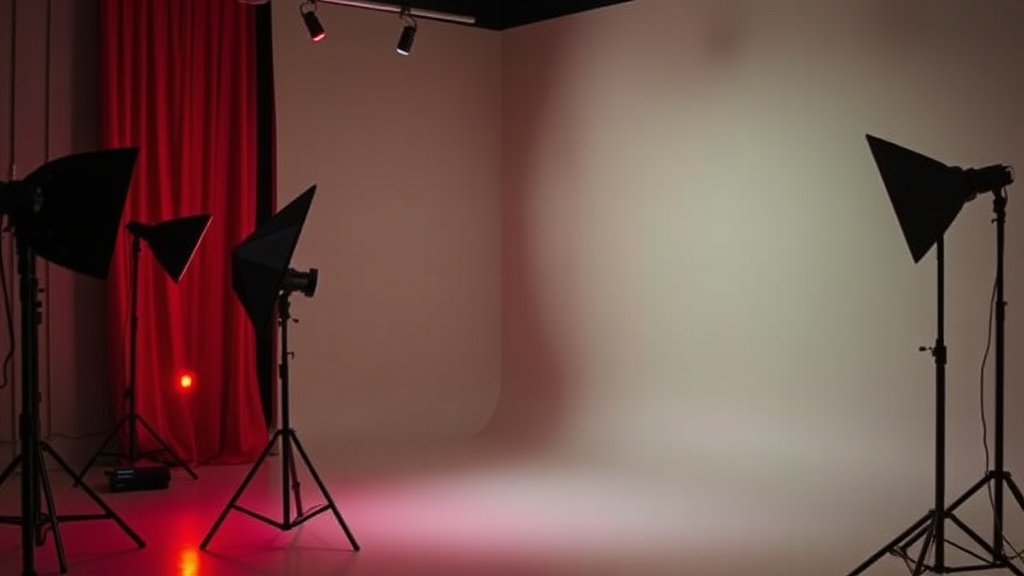
Why Your Studio Lighting Changes Your Color Accuracy

Stop Trusting Your Eyes Without Checking the Light
Many crafters believe that if they can see a color clearly under their desk lamp, they've judged it correctly. This is a mistake. Color perception isn't a constant; it's a variable that changes based on the light source hitting your work. You might spend three hours mixing the perfect shade of ochre, only to find it looks muddy or sickly once you take it out of your workspace. This happens because different light sources have different spectral power distributions—basically, they contain different amounts of red, green, and blue light. If you're working under standard incandescent bulbs, you're seeing a much warmer, yellower version of your palette than what actually exists.
Understanding light-source properties is the only way to ensure your finished projects look the way you intended. Whether you're a painter, a textile artist, or a jeweler, the light in your room acts as a filter. If that filter is biased toward yellow or blue, your color choices will be biased too. You aren't just working with your materials; you're working with the light that bounces off them. If you ignore the light, you're effectively working blind.
What is the Best Light for Color Accuracy?
When people ask about the best light for art, they usually want a single answer. The truth is more nuanced. For most visual arts, you want light that mimics natural daylight, often referred to as "daylight-balanced" light. This usually means a color temperature around 5000K to 6500K. If your light is too warm (low Kelvin), your blues will look dull and your yellows will look overly intense. If it's too cool (high Kelvin), your warm tones will lose their vibrancy and look gray.
A high-quality light source should also have a high Color Rendering Index (CRI). The CRI is a scale from 0 to 100 that measures how accurately a light source reveals the true colors of an object. Most household LED bulbs have a low CRI, often around 80 or even lower. For serious studio work, you need a CRI of 90 or higher. This ensures that the red, green, and blue wavelengths are being presented to your eyes in a balanced way. You can find detailed information on how light affects color through resources like the American National Standards Institute, which sets many of the benchmarks for lighting-related measurements.
It's also worth looking at the spectral quality. A light might claim to be "daylight" but still have a huge gap in its spectrum. This is why professional-grade studio lights are more expensive; they aren't just bright, they are spectrally complete. Without a full spectrum, you'll never truly see the subtle nuances in your pigments or threads.
How Do I Test My Colors Under Different Lights?
A reliable method for testing color consistency is the "window test." If you've been working in a room with artificial light, take your piece (or a sample of your work) to a window. Natural sunlight is the gold standard for color comparison. If your colors look vibrant and accurate near the window but look dead or "off" when you return to your desk, your studio lighting is the culprit. This isn't a flaw in your technique; it's a mismatch between your environment and your eyes.
Another way to troubleshoot is to use a colorimeter or a digital color checker. While this might seem a bit technical for a craft studio, it's a practical way to verify accuracy. You can use a standard color checker card—the kind used by photographers—to see how your light source renders specific, known colors. If the red on your card looks orange under your lamp, you know your light is too warm. You can learn more about the technical side of color management through the International Color Consortium, which provides deep dives into how color is standardized globally.
| Light Type | Typical Kelvin | Color Feel | Best For |
|---|---|---|---|
| Incandescent | 2700K - 3000K | Warm/Yellow | Cozy vibes, not color work |
| Warm White LED | 3000K - 4000K | Neutral/Soft | General crafting |
| Daylight LED | 5000K - 6500K | Crisp/Blue-White | Painting, weaving, precision work |
| Note: Always check the CRI value before purchasing! | |||
Don't just rely on the Kelvin number. A 5000K bulb with a CRI of 80 is much worse for your art than a 4000K bulb with a CRI of 95. The CRI tells you how "complete" the light is, while Kelvin only tells you the "temperature." For a studio, you want a high-CRI, mid-to-high Kelvin light to ensure your work remains consistent across different environments.
Can I Fix Poor Studio Lighting Without a Full Remodel?
You don't need to tear down your walls to improve your workspace. Small, targeted changes often yield the biggest results. First, consider your ambient light. If you're working in a room with heavy, colored curtains or tinted windows, you're fighting an uphill battle. Clear the clutter and try to use neutral-colored walls or backdrops in your workspace to prevent color bleeding from your surroundings.
The most effective change is replacing your desk lamp. Instead of a general-purpose bulb, buy a high-CRI, daylight-balanced LED bulb specifically designed for color-critical tasks. This is a low-cost way to drastically change how you perceive your projects. If you're a textile artist, look into dedicated light boxes that allow you to test your fabric colors under various light temperatures. This gives you a controlled environment to see how a piece might look in a dim restaurant versus a bright outdoor setting.
Lastly, pay attention to shadows. If your light is coming from directly above, you'll create harsh shadows that obscure the texture and true color of your work. Position your light sources to the side or at an angle to provide more even, diffused illumination. This reduces glare and helps you see the depth of your pigments or the weave of your fabric without the interference of heavy shadows. A well-lit space isn't just about seeing what you're doing; it's about seeing what you're *actually* doing.
Quick Checklist for Studio Light Improvement
- Check the CRI (aim for 90+).
- Verify the Kelvin (aim for 5000K-6500K).
- Test your work near a window to check for color shifts.
- Use diffused light to minimize harsh shadows.
- Avoid working under warm-toned incandescent bulbs.