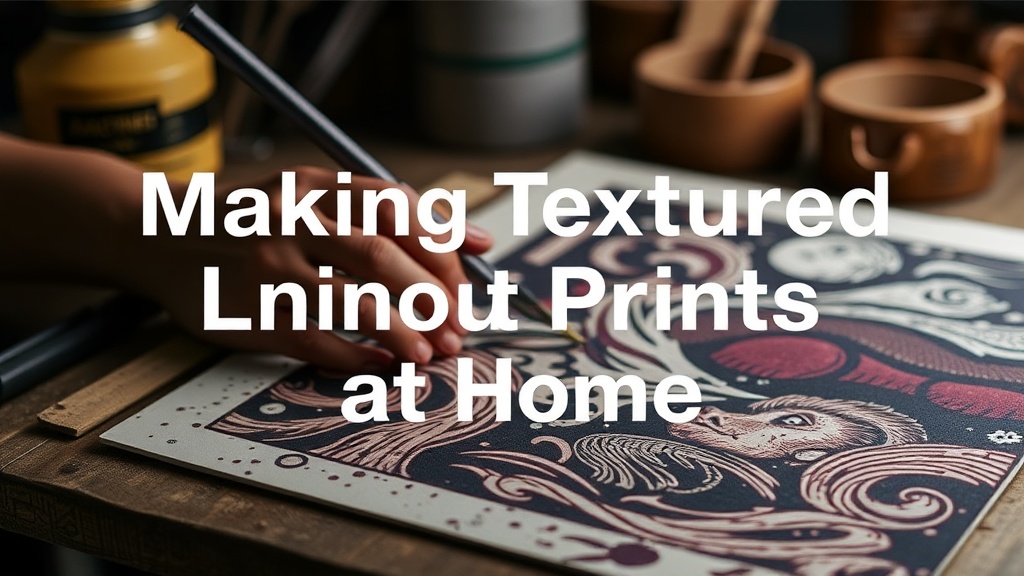
Making Textured Linocut Prints at Home

In this guide, you'll learn how to create textured linocut prints using specific carving techniques and ink application methods. We'll cover the tools you need, how to carve varied textures, and how to achieve professional-grade ink coverage at home.
What Tools Do I Need for Linocut Printing?
To start linocut printing, you need a linoleum block, a carving tool set, a brayer (roller), block printing ink, and a baren or heavy spoon for pressure.
I recommend starting with Speedball products. They are the industry standard for a reason—they're reliable and won't break the bank. You'll want a set of carving tools with different nibs (V-tools and U-tools) to create those varied textures we're talking about. If you're working with a softer material like rubber rather than traditional linoleum, it's often easier for beginners, but traditional linoleum holds much finer detail.
Here is a breakdown of the essential supplies:
| Tool | Purpose | Pro Tip |
|---|---|---|
| Linoleum Block | The surface you carve into. | Warm it up slightly with a hair dryer to make carving easier. |
| V-Tool | Creating fine, sharp lines. | Use this for outlines and intricate details. |
| U-Tool | Removing large areas of material. | Great for creating wide, organic textures. |
| Brayer | Applying ink to the block. | Ensure it's a rubber roller for even ink distribution. |
| Baren | Applying pressure to the paper. | A heavy metal spoon works perfectly well too. |
Don't forget the ink. For home printing, water-based inks are much easier to clean up. If you're looking for more technical details on the chemistry of printing inks, the Wikipedia page on printing ink offers a deep dive into how pigments interact with surfaces.
How Do You Carve Texture into Linoleum?
You create texture by varying the depth and shape of your cuts using different carving tools. Texture isn't just about "patterns"—it's about how light and shadow interact with the ink on the paper.
Start by sketching your design onto the block. You can use a permanent marker or a pencil. Once your design is set, begin carving. If you want a "distressed" or "organic" look, don't aim for perfect, clean lines. In fact, intentional imperfections are where the magic happens. Use a small V-tool to create tiny, stippled dots. This creates a grainy, textured effect that looks much more professional than a flat, solid color.
If you want broader, more rhythmic textures, use a larger U-tool. You can carve long, sweeping curves or jagged, short strokes. The goal is to create different "levels" of depth. A shallow cut will pick up a little bit of ink (creating a light, speckled texture), while a deep cut will leave a completely white area on your print. It's a bit of a balancing act—too shallow and the ink might fill the groove; too deep and you might compromise the structural integrity of the block.
One thing to keep in mind: always carve away from your body. It sounds obvious, but I've seen plenty of beginners lose focus and end up with a trip to the urgent care because they weren't paying attention. Safety first (always).
If you're interested in other ways to manipulate surfaces and textures, you might enjoy reading about creating intricate cyanotype prints, which also relies heavily on the interplay of light and shadow.
How Much Ink Should I Use for a Clean Print?
The secret to a clean print is applying a thin, even layer of ink to the block using a brayer. Most beginners make the mistake of using too much ink, which leads to "clogged" textures where the ink fills in the fine lines you worked so hard to carve.
To get the ink right, follow these steps:
- The "Squeak" Test: Place a small amount of ink on a glass or plastic slab. Use your brayer to spread it out until you hear a consistent, rhythmic "velcro" or "squeaking" sound. This indicates the ink is thin and even.
- The Roll-Out: Roll the ink onto your linoleum block. You want to see a very fine, uniform texture on the block—not clumps or puddles.
- The Layering: It is often better to do two light passes with the brayer than one heavy, thick pass. This ensures the ink stays on the "high" parts of your texture and doesn't seep into the "low" parts.
If your print comes out looking "muddy" or losing detail, you've used too much ink. If it looks "salt-and-peppered" or patchy, you didn't use enough. Finding that middle ground takes practice, but once you hit it, your prints will look incredibly crisp. It's a bit like a science experiment—adjust one variable at a time until you find the sweet spot.
Once the ink is on the block, lay your paper on top. Use your baren or the back of a large spoon to rub the back of the paper. Apply even, circular pressure. Don't just press hard in one spot—that will create an uneven print. You want to distribute that pressure across the entire surface area. If you're working with heavier papers, you might need to apply a bit more muscle, but be careful not to tear the paper.
If you're working with high-quality paper, you'll want to make sure it's kept in good condition. Check out my previous post on how to keep your sketchbook pages flat and smooth to ensure your paper is ready for the printing process.
The beauty of linocut is the physical nature of the work. You aren't just clicking a button; you're physically manipulating a medium. That tactile feedback—the resistance of the linoleum, the sound of the brayer, the feeling of the pressure—is what makes the final result so satisfying. It's a slow process, but that's exactly why the texture feels so intentional and alive. Go ahead and experiment with different tool combinations. The more you play with the depth of your cuts, the more you'll discover the unique "voice" of your carving tools.
Steps
- 1
Sketch Your Design
- 2
Carve the Linoleum Block
- 3
Apply Ink with a Brayer
- 4
Press the Paper onto the Block
- 5
Peel and Reveal Your Print